Yes, you can use a carpet cleaner on a rug, but only on certain rug types and only with the right technique. Synthetic rugs made from nylon, polyester, or polypropylene generally handle a carpet deep cleaner well. Natural fiber rugs made from wool, silk, jute, or sisal are a different story. Using the wrong method on the wrong rug can cause permanent color bleeding, fiber damage, shrinkage, or mold growth that no amount of re-cleaning can fix.
This article covers which rugs can handle machine cleaning, which cannot, how to do it safely when it is appropriate, and when a professional rug cleaner is the smarter choice.
Why Rug Cleaning Is Not the Same as Carpet Cleaning
The biggest mistake homeowners make is treating a rug and wall-to-wall carpet as interchangeable. They are not.
Wall-to-wall carpet is manufactured for in-place machine cleaning. It has a uniform synthetic backing, consistent fiber construction, and is designed to handle repeated passes from a carpet rug cleaner without distorting. It also sits on a subfloor that allows airflow and faster drying underneath.
Area rugs are portable textiles with enormous variety in fiber type, construction method, dye type, and backing material. A polypropylene outdoor rug and a hand-knotted Persian wool rug are both called rugs, but they require completely different cleaning approaches. Using a consumer rug cleaning machine on a delicate handmade rug can destroy it in a single session.
According to rug care specialists at Maloumian Rugs, they regularly see rugs that have lost softness, shape, or color because a carpet cleaner was used without understanding how the rug’s construction differs from installed carpet. The Carpet and Rug Institute classifies area rugs as a primary indoor air filter, and research from rug cleaning professionals in the Carolinas found that professional cleaning can remove up to 90 percent of the allergens trapped in rug fibers. Protecting that investment by cleaning correctly is the entire point.
Rug Types That Can Handle a Carpet Cleaner
The rugs most compatible with machine cleaning share one characteristic: synthetic, durable fiber construction.
Polypropylene rugs are among the most machine-friendly options available. Polypropylene is inherently stain-resistant, moisture-resistant, and built for durability. These rugs can be cleaned with a carpet deep cleaner using standard technique without significant risk.
Nylon rugs are resilient and hold up well to moisture and mechanical cleaning. They respond well to hot water extraction and dry relatively quickly compared to natural fiber alternatives.
Polyester rugs are similarly durable and generally safe for machine cleaning with appropriate solution selection.
Machine-washable cotton rugs can be cleaned with a carpet rug cleaner provided the cleaning solution is gentle and the process is done carefully. The risk of color bleeding is higher with cotton than with synthetic materials, so a colorfastness test beforehand is always worth doing.
Even with these compatible materials, using the best rug cleaner machine you can access matters. A machine with strong extraction power removes more moisture, which reduces drying time and the risk of mildew. Consumer rental units vary significantly in suction quality.
Rug Types That Should Never Go Near a Carpet Cleaner
The risk of irreversible damage is highest with natural fiber and handmade rugs. These are the materials where a rug cleaning machine should not be the first or second option considered.
Wool rugs are the most commonly damaged by improper machine cleaning. Hot water causes natural dyes in wool to bleed and run, ruining patterns that cannot be restored. The pressure and brush action of a carpet cleaner also works against the grain of wool fibers, causing fraying and distortion. A professional rug cleaner with wool-specific experience and pH-neutral solutions is the correct choice for wool.
Silk and viscose rugs are extremely sensitive to moisture. Wet fibers lose their sheen, and viscose in particular breaks down when saturated, becoming permanently distorted. Area rug steam cleaning with a steam rug cleaner on silk is especially damaging because the heat compounds the moisture problem. These rugs require dry cleaning or immersion washing by a specialist, not a consumer machine.
Jute and sisal rugs absorb water and retain it in ways that create ideal conditions for mold and mildew. Even limited moisture exposure can weaken the fiber structure permanently. Minimal-moisture spot cleaning is the only appropriate at-home method for these materials.
Oriental and Persian rugs present a specific combination of risks. The natural dyes used in these rugs run more easily than synthetic dyes when exposed to hot water or incompatible cleaning chemicals. The hand-knotted construction also means that cleaning from above, as a carpet deep cleaner does, does not reach or clean the foundation of the rug. According to specialists at Babash Rug Services, only a professional rug cleaner using immersion washing and proper drying equipment can fully and safely clean the foundation of a handmade rug.
Shag rugs are a borderline case. Some sources say they can handle gentle machine cleaning, but the long, loose fibers are vulnerable to matting and mechanical damage from brush attachments. The safer choice is hand cleaning or professional care.
How to Use a Carpet Cleaner on a Rug Safely
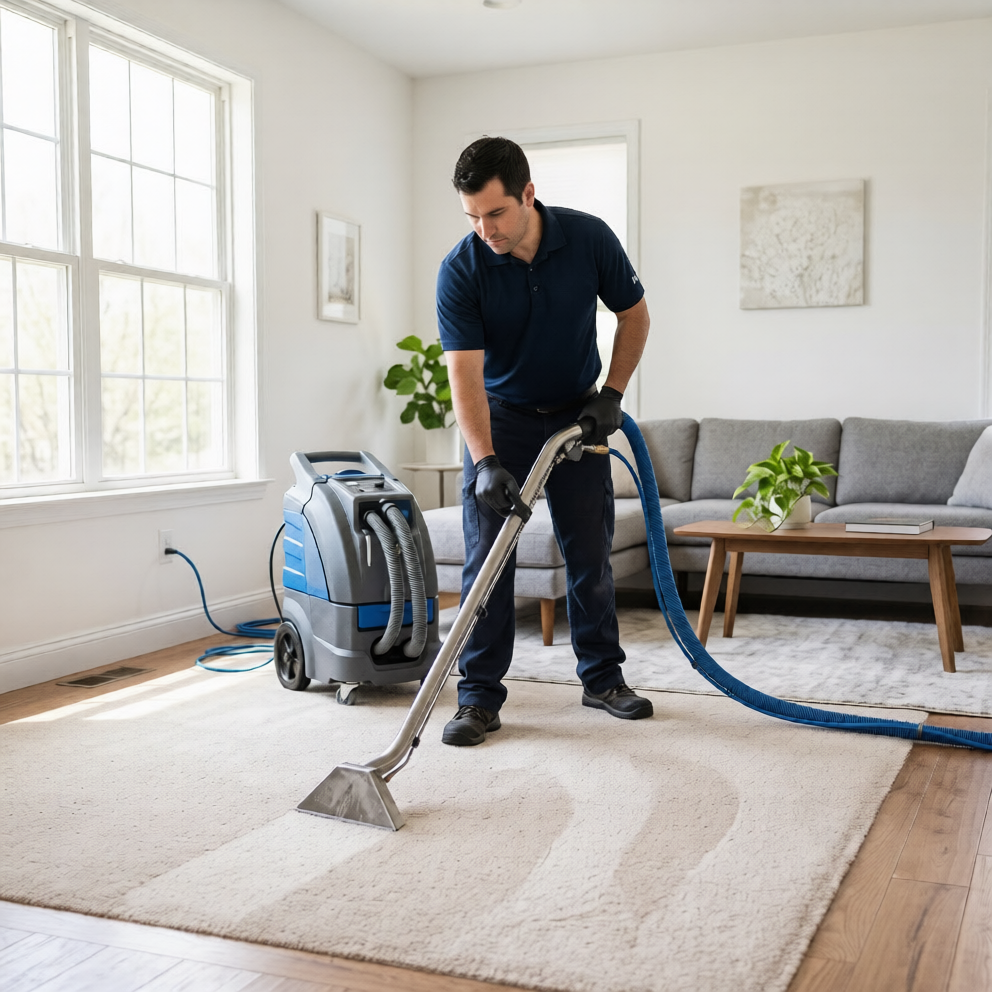
If your rug is synthetic and in good condition, here is how to clean it without causing damage.
Step 1: Check the care label. Every rug has a care label. Read it before doing anything. If the label specifies dry clean only or prohibits water exposure, stop there regardless of what the fiber looks or feels like.
Step 2: Test for colorfastness. Press a damp white cloth against a hidden section of the rug for 30 seconds. If color transfers to the cloth, machine cleaning with water will cause the dyes to run across the surface. Use dry cleaning methods or professional care instead.
Step 3: Vacuum both sides thoroughly. Remove the rug from the floor, flip it over, and vacuum the back first to dislodge embedded dirt. Then vacuum the front. This step removes dry debris so it does not mix with cleaning solution and get driven deeper into the fibers.
Step 4: Pre-treat any stains. Apply an upholstery-safe or rug-specific stain remover to problem areas and allow the recommended dwell time before proceeding.
Step 5: Use cool or lukewarm water only. Hot water is one of the most common causes of rug damage during machine cleaning. Even for rugs that tolerate moisture, hot water can cause shrinkage and accelerate color bleeding. Adjust the temperature setting on your machine or allow hot water to cool before use.
Step 6: Use a gentle, rug-safe cleaning solution. Standard carpet shampoo is formulated for synthetic carpet fibers and may be too harsh for rug materials. Choose a pH-neutral solution compatible with your rug’s fiber type and avoid any product containing bleach or aggressive surfactants.
Step 7: Work in sections with minimal passes. Make one or two slow, controlled passes with solution, then immediately extract. The goal is thorough cleaning with minimal moisture left behind. Oversaturation is where most DIY rug cleaning goes wrong.
Step 8: Make multiple dry extraction passes. After the cleaning passes, go over each section multiple times with suction only until almost no moisture comes up. This is the most important step for preventing mold and mildew.
Step 9: Dry completely before returning to the floor. Lay the rug flat in a well-ventilated area, prop it vertically if possible, and use fans to accelerate airflow. Do not place it back on the floor until it is bone dry. A damp rug placed back down traps moisture between the rug and flooring, which creates mold conditions on both surfaces.
When a Steam Rug Cleaner Is Not the Right Choice
Area rug steam cleaning is sometimes proposed as a gentler alternative to hot water extraction, but it has significant limitations that homeowners should understand before choosing it.
A steam rug cleaner uses heat to generate steam that loosens surface dirt and kills some bacteria. The heat that makes it effective is also what makes it risky for natural fiber rugs. The high temperatures can damage dyes, weaken fiber structure, and cause shrinkage in wool and cotton materials. Additionally, steam cleaning only addresses surface contamination. The deep foundation of a rug, where the majority of embedded dirt, allergens, and dust mites accumulate, remains largely untouched by a steam pass.
According to specialists at Babash Rug Services, a steam cleaning procedure that uses minimal water cannot eliminate most of the germs and bacteria that have settled deep within rug fibers over time, precisely because the process uses too little water to penetrate the foundation while also drying fast enough to prevent damage. That limitation means surface results may look clean while the deeper layers remain contaminated.
For rugs with rubber or latex backing, area rug steam cleaning is specifically not recommended because the moisture and heat combination deteriorates the backing material.
The Difference Between a Carpet Cleaner Professional and a Professional Rug Cleaner
This distinction is worth understanding clearly. A carpet cleaner professional is trained and equipped to clean wall-to-wall carpet using hot water extraction. A professional rug cleaner specializes in portable textiles and uses completely different methods.
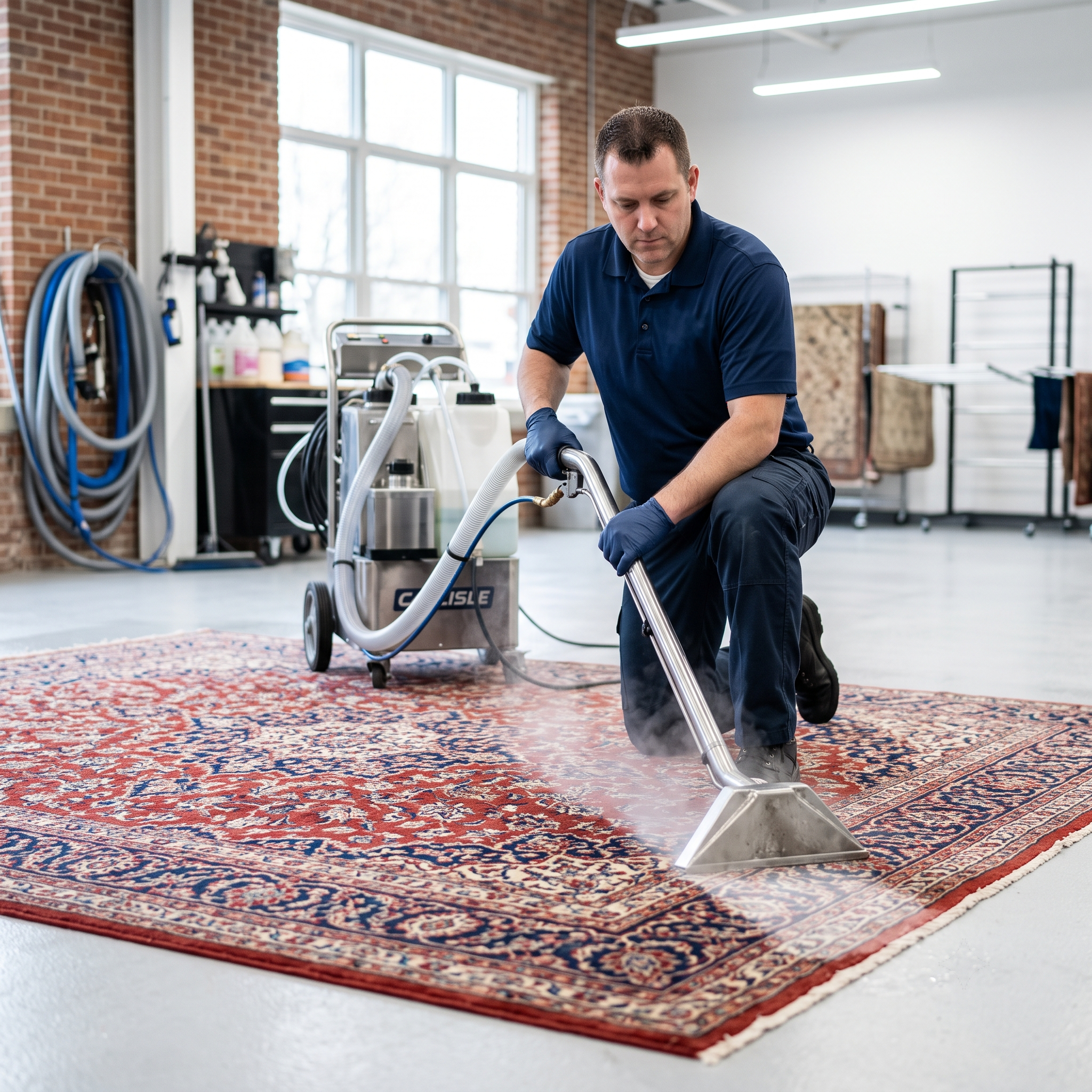
Rug cleaning at the professional level typically involves dusting the rug to remove embedded dry soil before any moisture is applied, immersion washing in which the rug is fully submerged and the foundation is cleaned as thoroughly as the surface fibers, controlled rinsing to remove all cleaning solution residue, and centrifuge drying or carefully controlled flat drying to remove 95 percent of moisture quickly without heat damage.
A standard carpet deep cleaning service that cleans in place on the floor cannot replicate this process. The machine passes over the rug surface from above and extracts from above. The foundation, where deep soil accumulates and where allergens concentrate, does not receive the same treatment. For a durable synthetic rug with light to moderate soiling, that surface-level result may be entirely adequate. For a wool, silk, Persian, or high value handmade rug, it is not.
When to Call a Professional Rug Cleaner in Carlisle PA
Certain situations call for professional care regardless of rug type.
Call a professional if your rug is made from wool, silk, viscose, jute, sisal, or any natural fiber. Call a professional if the rug is handmade, antique, or of significant financial or sentimental value. Call a professional if there are deep, set-in stains from urine, blood, or pet accidents that have had time to bond with the fibers. Call a professional if there is any odor that surface cleaning has not resolved. Call a professional if you are not certain of the fiber type and do not want to risk damage testing it.
NYU Microbiologist Phillip Tierno recommends cleaning area rugs every six months, noting that he has found seven pathogens including E. coli, Norovirus, and penicillin-resistant MRSA in carpeting within average homes. The American Lung Association recommends deep cleaning at least once per year. For households with pets, children, or allergy sufferers, the six-month schedule is the more protective standard.
The Real Carpet Cleaners provides professional rug cleaning in Carlisle, PA and surrounding communities using professional-grade equipment and methods appropriate to the rug type. The team also provides carpet cleaning and mattress cleaning across Carlisle, Mechanicsburg, Harrisburg, Shippensburg, Camp Hill, and communities throughout Central Pennsylvania. Check current specials for available offers before booking.
How Often Should You Clean an Area Rug
Cleaning frequency depends on how the rug is used and who lives in the home.
High-traffic rugs in entryways, living rooms, and hallways should be cleaned every three to six months. Moderate-traffic rugs in bedrooms and dining areas can typically go six to twelve months between full cleanings. Households with pets or young children should clean every six to nine months regardless of visible soiling, because pet dander and food particles accumulate in fiber foundations faster than they become visible on the surface. Households with allergy or asthma sufferers should clean every six months at minimum, since research from rug cleaning specialists found that professional cleaning can remove up to 90 percent of allergens embedded in rug fibers.
Between full cleanings, vacuuming weekly or biweekly removes the surface soil that would otherwise work its way deeper into the pile. A rug pad underneath extends the time between needed cleanings by reducing how much soil transfers from the floor into the backing.
Final Thoughts
Can you use a carpet cleaner on a rug? Yes, on durable synthetic rugs with proper technique, cool water, gentle solution, and thorough drying. No, on wool, silk, jute, sisal, viscose, Persian, or handmade rugs where machine cleaning risks permanent damage that cannot be undone.
The fiber type is the single most important factor in this decision. When in doubt, a professional rug cleaner is always the safer choice, particularly for any rug with significant value or delicate construction. NYU Microbiologist Phillip Tierno’s recommendation of cleaning every six months reflects how much a well-maintained rug contributes to indoor air quality, and how much a neglected one undermines it.
To schedule professional rug cleaning in Carlisle, PA and surrounding areas, contact The Real Carpet Cleaners at 717-307-5849. Serving Carlisle, Mechanicsburg, Harrisburg, Shippensburg, Camp Hill, and communities throughout Central Pennsylvania.