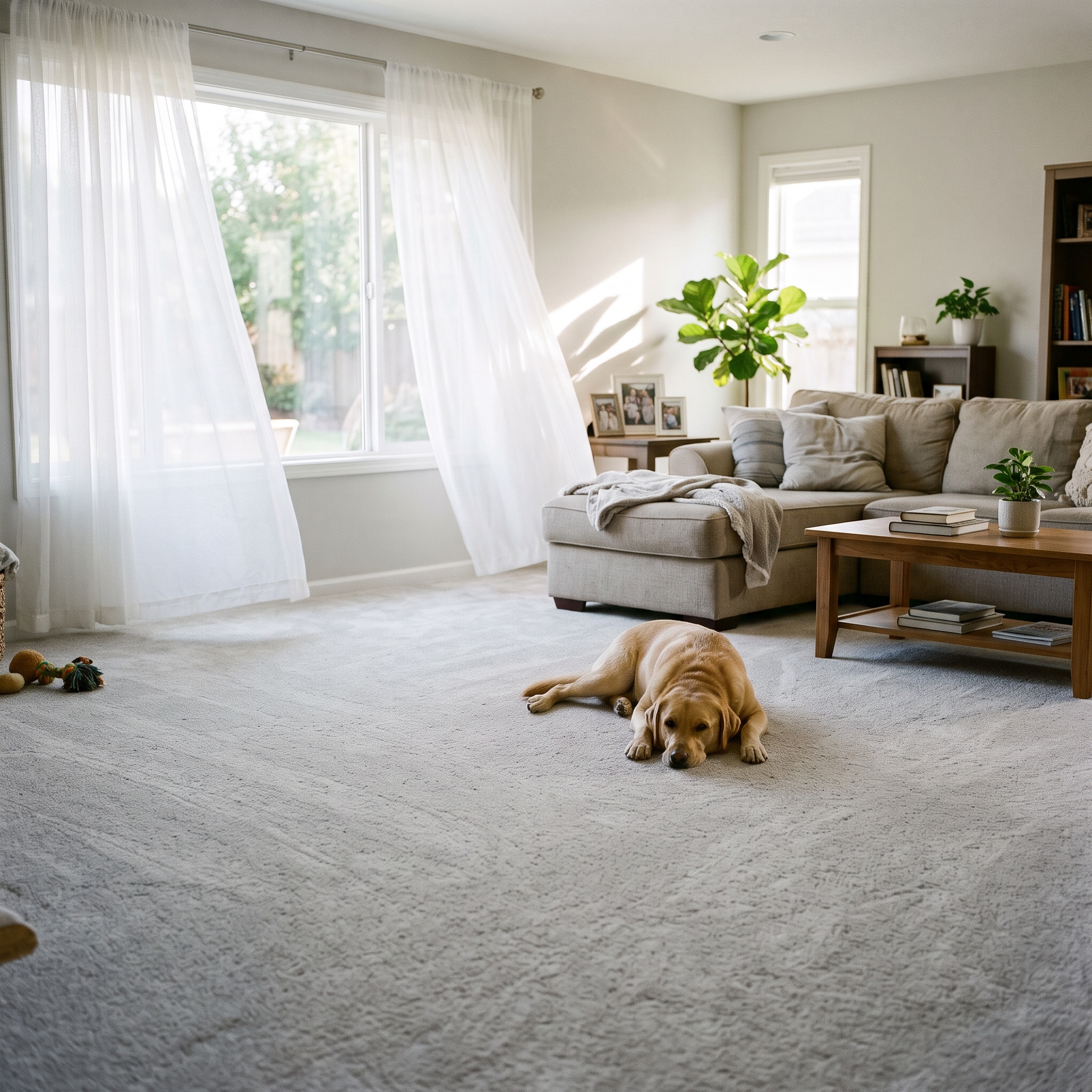
Professional carpet cleaning improves indoor air quality in Carlisle, PA by removing the allergens, dust mites, bacteria, and pollutants that accumulate deep in carpet fibers where vacuuming cannot reach them. Carpets act as both a filter and a reservoir in your home. They trap airborne particles that would otherwise remain suspended in the air you breathe. Over time, that reservoir fills to a point where the carpet begins releasing those particles back into the air with every footstep, every time a child sits on the floor, and every time air movement disturbs the fiber surface. Understanding what professional carpet cleaning removes and how it removes it explains why regular professional appointments matter for household health across Carlisle, Mechanicsburg, Harrisburg, Shippensburg, Camp Hill, and surrounding Central Pennsylvania communities, not just for how the carpet looks.
How Carpets Affect Indoor Air Quality
The indoor environment in most homes contains a wider range of airborne pollutants than most homeowners realize. According to the Environmental Protection Agency, indoor air quality can be significantly worse than outdoor air quality even in urban environments, and the surfaces and materials inside a home are major contributors to that indoor pollution load.
Carpet flooring plays a dual role in this environment. On one hand, carpet fibers trap airborne particles including dust, pollen, pet dander, mold spores, and bacteria, removing them from the air and holding them in the fiber base where they are not immediately available to be inhaled. In this sense, carpet functions like a large passive filter. According to research cited by eufy, the available literature indicates that carpet flooring acts as a reservoir for accumulation of dust and indoor contaminants and microbiological material.
The problem is that the reservoir fills. As carpet accumulates particulate matter in the fiber base, the particles become increasingly accessible to disturbance. Foot traffic, children playing on the floor, pets moving across the surface, and air currents from HVAC systems all disturb the fiber base and release previously trapped particles back into the breathing zone. A carpet that reached its accumulation capacity becomes a net source of airborne particles rather than a net filter for them.
This is why carpet condition affects respiratory health in ways that are not visible from the surface. A carpet that looks reasonably clean may be operating as a particle source for everyone in the room because the fiber base has accumulated beyond its filter capacity. According to research compiled by Yarra Valley Carpet Cleaning, carpets hold 12 times more dust than hard floor surfaces, creating a hidden reservoir of allergens that affects indoor air quality every day.
What Specifically Lives in an Uncleaned Carpet
Understanding what accumulates in carpet fiber between professional cleaning appointments clarifies what professional cleaning actually removes and why its removal matters for indoor air quality.
Dust mites are microscopic organisms that live in carpet fibers, feeding on shed human skin cells. According to research from ftworthcarpetcleaning.com’s 2026 carpet cleaning guide, a single gram of carpet dust can contain thousands of mites and their waste products, which are among the most potent indoor allergens known. Dust mite waste particles are small enough to become airborne with minimal disturbance and are a primary trigger for allergic rhinitis and asthma symptoms. According to the National Sleep Foundation, a single mattress can harbor up to 10 million dust mites. Carpet in active living areas accumulates comparable populations given the warmth, humidity, and food source that carpet fiber environments provide.
Pet dander from cats, dogs, and other animals is one of the most persistent indoor allergens because the protein particles that trigger allergic responses are extremely small and remain airborne for extended periods before settling into carpet fibers. According to eufy’s allergen research, pet dander carried into a home environment, including dander on clothing from households with pets, accumulates in carpet fibers where it remains until professional extraction removes it.
Pollen enters homes through windows, doors, and on clothing and footwear. In Central Pennsylvania, spring pollen season is one of the most significant allergen events of the year, and pollen particles that settle into carpet fiber can remain there for months, continuing to trigger reactions in sensitive household members long after the outdoor pollen season has ended.
Mold spores accumulate in carpet fiber particularly in areas with elevated humidity or in the aftermath of any moisture event. According to research from AG Carpet Specialist, carpet environments that are warm, humid, and dark create ideal conditions for mold spore accumulation and, in cases of sustained moisture, active mold colony development. Central Pennsylvania’s summer humidity creates conditions that support mold spore accumulation in carpets that are not regularly cleaned and that lack adequate ventilation beneath them.
Bacteria from footwear, pet paws, and airborne sources accumulate in carpet fiber continuously. According to the indoor air quality research compiled by Dave’s Carpet and Upholstery Cleaning, fine dust, allergens, bacteria, and microscopic debris become embedded at the base of the carpet far beyond the reach of routine vacuuming.
Volatile organic compounds from cleaning products, off-gassing from furniture and building materials, and combustion byproducts also adsorb to carpet fiber. According to research from Metroltd.ca, professional carpet cleaning can remove VOCs trapped in carpet fibers alongside allergens and biological material.
The Real Carpet Cleaners provides professional carpet cleaning across Carlisle, Mechanicsburg, Harrisburg, Shippensburg, Camp Hill, and surrounding Central Pennsylvania communities using eco-friendly solutions safe for children and pets.
Why Vacuuming Alone Is Not Enough for Air Quality
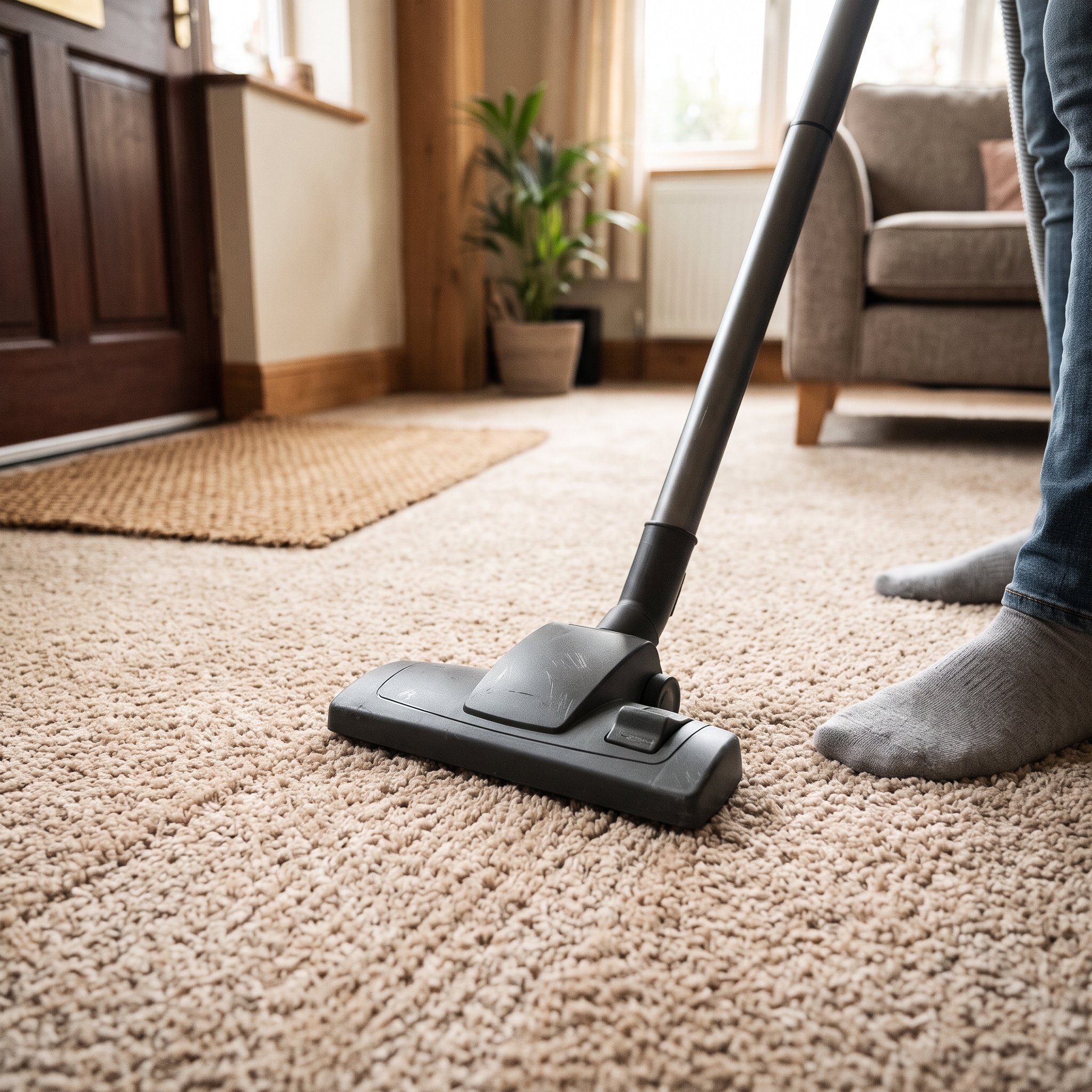
Regular vacuuming is the most important maintenance habit between professional cleaning appointments and removes a significant proportion of surface-level soil and loose particles. According to the Carpet and Rug Institute, 90 to 95 percent of all dry soil by weight can be removed from carpet by following a routine vacuuming schedule. That is a meaningful result and the best reason to vacuum consistently.
The limitation is that vacuuming addresses the upper portion of the carpet pile. Soil, allergens, and biological material that has worked its way to the base of the fiber, into the carpet backing, and into the padding beneath are outside the reach of standard vacuum suction. According to Dave’s Carpet and Upholstery Cleaning’s indoor air quality research, fine dust, allergens, bacteria, and microscopic debris become embedded at the base of the carpet far beyond the reach of routine vacuuming.
This lower-fiber-base accumulation is where the most significant air quality impact originates. Particles embedded at the fiber base are less accessible to immediate disturbance than surface particles but are continuously released over time through the micro-movements of fiber that foot traffic and air currents produce. They are also the particles most likely to be inhaled by people who spend time close to the floor surface, particularly young children and pets.
Vacuum filtration quality also limits what vacuuming achieves for indoor air quality. Standard vacuum filters release smaller particles back into the air during operation. HEPA filtration vacuums capture particles as small as 0.3 microns with a minimum 99.97 percent efficiency, which produces meaningfully better indoor air quality outcomes than standard filtration vacuums. Even with HEPA filtration, vacuuming does not reach the fiber base contamination that professional extraction addresses.
How Professional Hot Water Extraction Removes Air Quality Threats
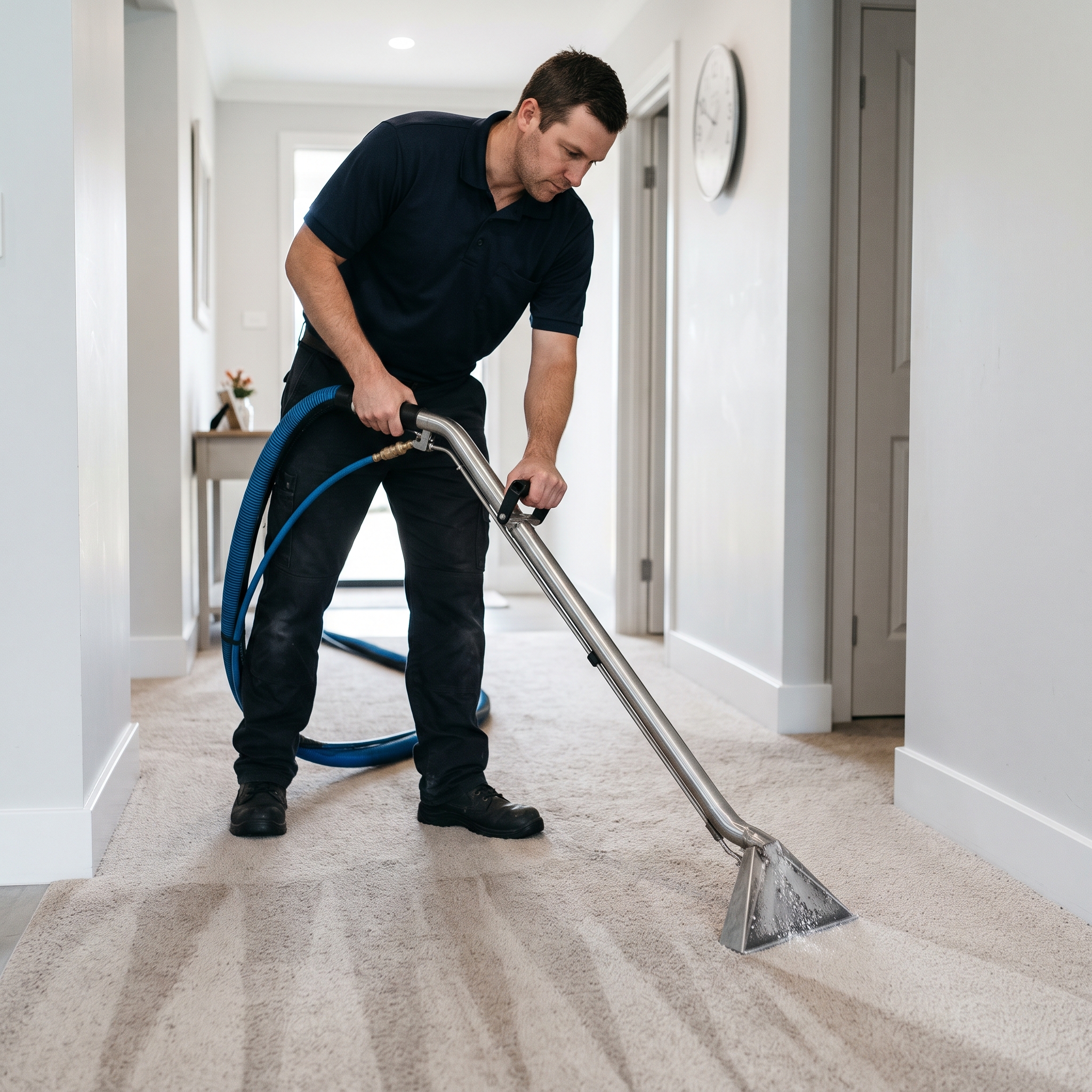
Professional hot water extraction is the cleaning method the IICRC recognizes as most effective for removing the full range of contaminants that affect indoor air quality. It works differently from any consumer cleaning approach and produces results that consumer equipment cannot replicate regardless of effort or technique.
The process delivers water heated to 150 to 200 degrees Fahrenheit under high pressure through the cleaning wand into the carpet fiber. At these temperatures, dust mites are killed on contact. According to AG Carpet Specialist’s dust mite research, steam cleaning and hot water extraction at professional temperatures effectively eliminates live dust mites and significantly reduces the allergens they leave behind. Consumer cleaning equipment does not achieve the water temperatures required for reliable dust mite elimination.
The simultaneous extraction component removes the heated water along with all suspended soil, allergens, bacteria, and cleaning residue from the full depth of the carpet fiber. According to Metroltd.ca’s indoor air quality research, hot water extraction can remove 50 percent or more of debris, dirt, bacteria, and allergens when done correctly. Yarra Valley Carpet Cleaning’s research puts deep steam cleaning’s removal rate for dust mite allergens at 90 percent or more.
According to IICRC standards, professional hot water extraction operated correctly by a trained technician removes up to 98 percent of contaminants from carpet fibers. That result reflects the combination of high-temperature delivery, chemical pre-treatment matched to the specific contaminant load, and the extraction pressure and volume that truck-mounted professional equipment delivers compared to any consumer alternative.
The drying time of professional truck-mounted equipment is significantly shorter than consumer equipment because the extraction component removes more moisture from the fiber during the cleaning pass. Carpets cleaned with professional equipment typically dry in two to four hours, limiting the window during which damp carpet conditions could support mold or dust mite activity in the fiber following cleaning.
Specific Health Benefits for Carlisle and Central PA Households
The indoor air quality benefits of professional carpet cleaning are most significant for specific household populations whose health is most directly affected by airborne allergen and contaminant levels.
Allergy sufferers experience the most immediate and most measurable benefit. Studies cited by eufy’s allergen research show that regular deep cleaning reduces allergy symptoms and improves breathing for people with sensitivity to dust, pollen, pet dander, and mold. For Carlisle and Central Pennsylvania households where one or more members manage allergic rhinitis, regular professional carpet cleaning is one of the most direct environmental interventions available.
Asthma patients benefit significantly from reduced carpet allergen loads. Dust mite waste, pet dander, and mold spores are among the most common asthma triggers, and all three accumulate in carpet fiber between professional cleaning appointments. According to the research cited by eufy, regular deep cleaning can improve breathing for people with asthma, and the removal of dust mite allergens specifically has been associated with reduced asthma symptom frequency and severity.
Young children spend more time in direct contact with carpet surfaces than any other household demographic and are proportionally more exposed to the contaminants in the fiber base. Children’s developing respiratory and immune systems are also more sensitive to indoor allergen and bacterial exposure than adult systems. For households with young children, professional carpet cleaning is a direct investment in the quality of the environment the child spends the most time in.
Older adults with respiratory sensitivities or compromised immune function benefit from the reduced contaminant load that professional cleaning produces. For households where an older adult spends significant time in carpeted rooms, the allergen and bacterial reduction from professional cleaning has a meaningful effect on the daily respiratory environment.
Pet owners in Carlisle and surrounding Central Pennsylvania communities face a particularly significant indoor air quality challenge because pets continuously generate dander that settles into carpet fiber throughout the day. According to research cited by eufy, hot water extraction using hot water and strong suction loosens and eliminates deeply embedded allergens like dust mites and dander, and households with pets benefit from cleaning every 6 months or more frequently to manage the continuous dander accumulation that pet ownership produces.
How Central Pennsylvania’s Climate Affects Carpet Allergen Levels
Central Pennsylvania’s seasonal climate creates specific indoor air quality challenges that affect carpet allergen accumulation rates differently across the year.
Spring brings one of the most significant pollen seasons in the eastern United States. Pollen from trees, grasses, and early-season plants enters homes continuously through windows, doors, and on clothing from late March through June. Pollen that settles into carpet fiber remains there until professional extraction removes it. For allergy sufferers in Carlisle and surrounding communities, a professional carpet cleaning in late spring after peak pollen season removes the accumulated pollen load before summer heat and indoor air conditioning create the closed-home conditions that concentrate indoor allergens.
Summer’s elevated humidity in Central Pennsylvania supports dust mite populations in carpet fiber. Dust mites thrive at humidity levels above 50 percent and at temperatures between 68 and 77 degrees Fahrenheit, conditions that Central Pennsylvania’s summer months produce reliably. According to AG Carpet Specialist’s dust mite research, keeping indoor humidity below 50 percent is the primary environmental measure for controlling dust mite populations, and summer in Central Pennsylvania frequently exceeds this threshold without active dehumidification.
Fall and winter create closed-home conditions where indoor air is recirculated continuously without the ventilation that open windows provide in warmer months. Airborne particles that would otherwise be partially diluted by outdoor air exchange remain concentrated in the indoor environment. In these conditions, carpet that is carrying a high allergen load releases those allergens into an increasingly concentrated indoor air environment. A professional cleaning before winter conditions set in reduces the allergen reservoir that the carpet carries through the months when ventilation is lowest.
The Frequency That Maintains Air Quality Benefits
A single professional carpet cleaning produces measurable indoor air quality improvement, but the benefit degrades as the carpet re-accumulates allergens and contaminants over subsequent months. Maintaining the air quality benefit requires a cleaning schedule matched to the household’s specific contamination rate.
For standard households with moderate traffic, no pets, and no allergy sufferers, professional cleaning every 12 to 18 months is the baseline recommendation. For households with pets, the accumulation rate of dander and bacteria is high enough to warrant cleaning every 6 to 12 months to maintain meaningful indoor air quality improvement. For households with allergy or asthma sufferers, every 3 to 6 months produces the most sustained air quality benefit and the most consistent reduction in symptom exposure.
According to Yarra Valley Carpet Cleaning’s seasonal cleaning research, timing professional cleaning appointments to align with the end of high-allergen seasons, specifically late spring for pollen and late fall before winter closed-home conditions, produces the most sustained benefit across the full year rather than a single post-cleaning improvement that degrades before the next appointment.
The Real Carpet Cleaners also provides professional rug cleaning, furniture cleaning, and mattress cleaning for Carlisle and surrounding Central Pennsylvania households who want to address every fabric surface that contributes to indoor allergen levels in a single appointment. Check current specials before booking.
Final Thoughts
Professional carpet cleaning improves indoor air quality in Carlisle, PA by removing the dust mites, pet dander, pollen, mold spores, bacteria, and volatile organic compounds that accumulate in carpet fiber between appointments and that vacuuming alone cannot reach at the fiber base depth where they reside. The IICRC standard that professional hot water extraction removes up to 98 percent of contaminants from carpet fibers reflects what a properly executed professional appointment achieves that no consumer equipment or maintenance routine can replicate.
For households across Dauphin County, Cumberland County, and surrounding Central Pennsylvania communities where allergy sufferers, asthma patients, young children, older adults, or pets are present, professional carpet cleaning is one of the most direct environmental health interventions available. The air quality benefit begins with the first appointment and is sustained through a cleaning schedule matched to the household’s specific contamination rate.
To schedule professional carpet cleaning in Carlisle, PA and surrounding Central Pennsylvania communities, contact The Real Carpet Cleaners at 717-307-5849. Serving Carlisle, Mechanicsburg, Harrisburg, Shippensburg, Camp Hill, and surrounding communities throughout Central Pennsylvania.