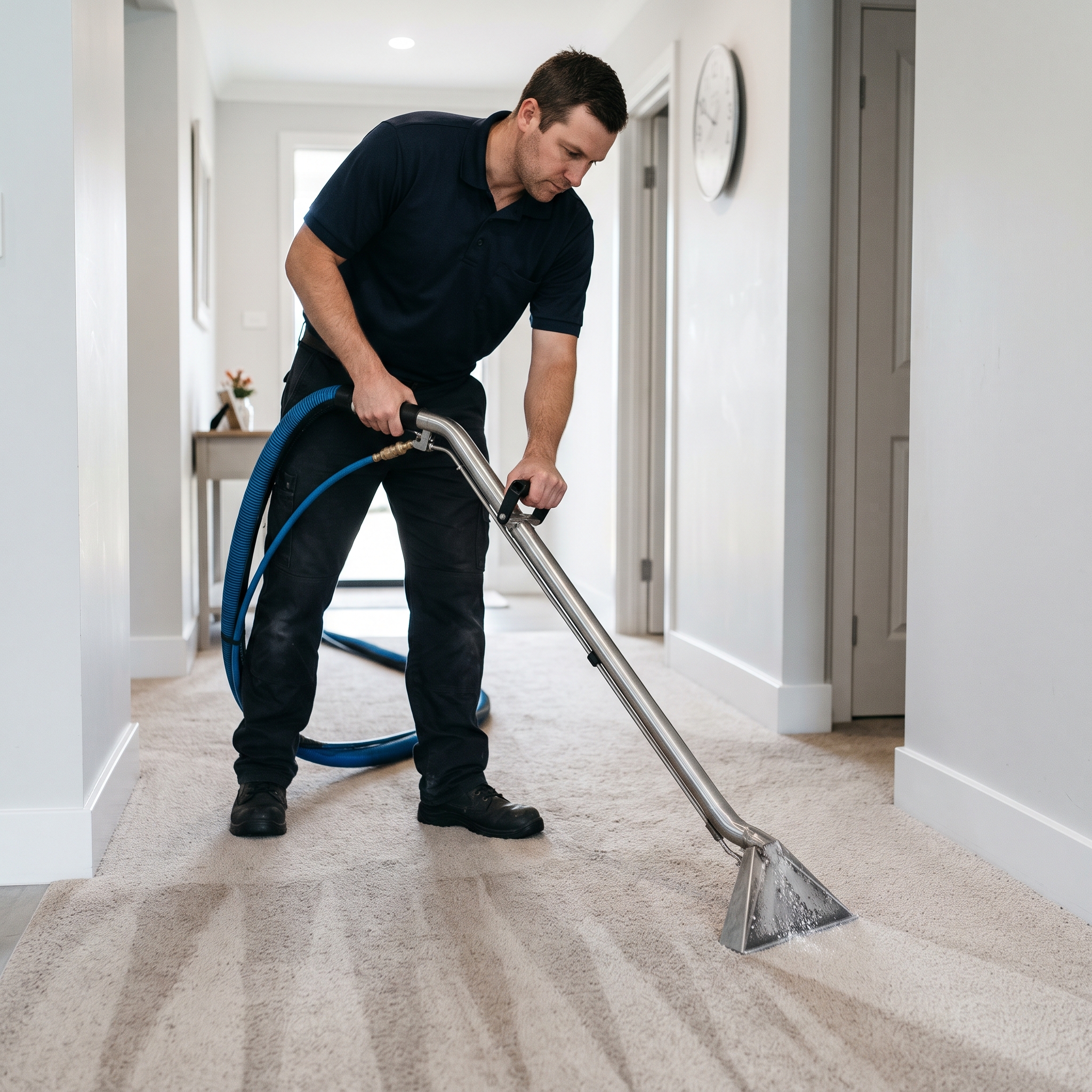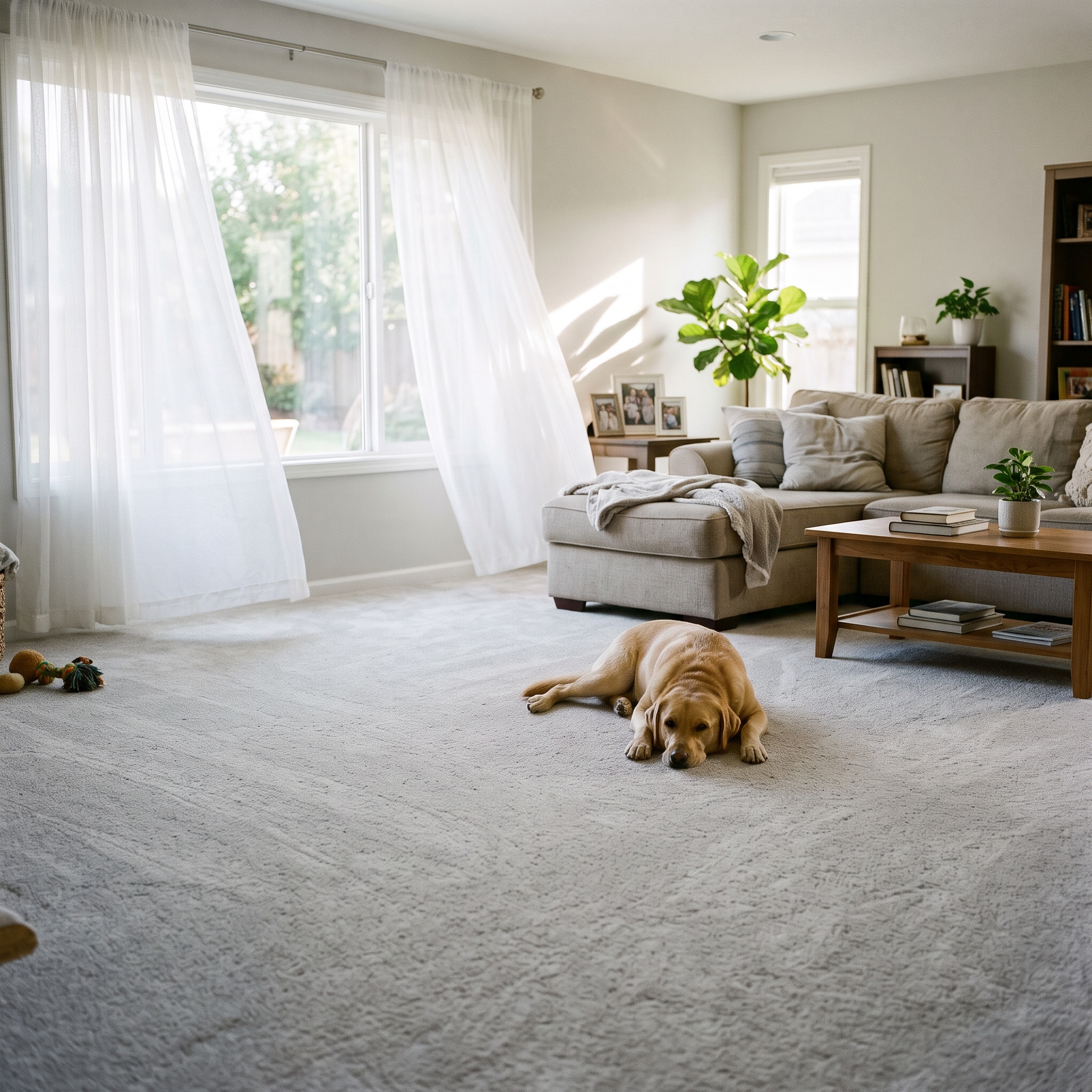
The single most effective thing you can do for carpet maintenance in Carlisle, PA between professional cleaning appointments is also the simplest: vacuum consistently, treat spills immediately, and protect high-traffic areas before they show wear. Professional hot water extraction removes what daily maintenance cannot reach, including embedded soil, allergens, and bacteria deep in the fiber base. But what happens between professional appointments determines how quickly that soil accumulates, how quickly fibers wear, and whether the carpet reaches its full expected lifespan or falls short of it. The habits covered in this guide take less time than most homeowners expect and produce a measurably longer-lived, better-looking carpet in homes across Carlisle, Mechanicsburg, Harrisburg, Shippensburg, Camp Hill, and surrounding Central Pennsylvania communities.
Why Carpet Maintenance Between Cleanings Matters
Carpet is a significant home investment. The Carpet and Rug Institute estimates that a quality carpet lasts 10 to 15 years with proper care and less than half that without it. The difference between those two outcomes is almost entirely determined by how consistently the carpet is maintained between professional cleaning appointments.
Dirt and debris that sit in carpet fibers do not just make the carpet look dull. They act as abrasive particles that cut carpet fibers with every footstep. According to Nebraska’s Best Carpet, dirt and debris embed into carpet fibers and damage them when walked on, which is why consistent vacuuming is not just about appearance but about structural fiber preservation. A carpet that carries an embedded soil load is being abraded with every step taken across it, and that mechanical wear cannot be reversed by cleaning once it has occurred.
Soil accumulation also affects indoor air quality. Carpets act as a filter, trapping dust, pollen, pet dander, and bacteria in the fiber base where they remain until professional extraction removes them. Consistent maintenance habits between professional appointments slow the rate at which the filter reaches capacity and keep the air quality benefit of clean carpet fibers working in your household’s favor.
Professional cleaning every 12 to 18 months for standard households, and every 6 to 12 months for households with pets, children, or allergy sufferers, is the schedule recommended by the Carpet and Rug Institute. The maintenance habits between those appointments determine how much benefit the professional cleaning can deliver when it happens.
The Real Carpet Cleaners provides professional carpet cleaning across Carlisle, Mechanicsburg, Harrisburg, Shippensburg, Camp Hill, and surrounding Central Pennsylvania communities using eco-friendly solutions safe for children and pets.
Vacuum More Often Than You Think You Should
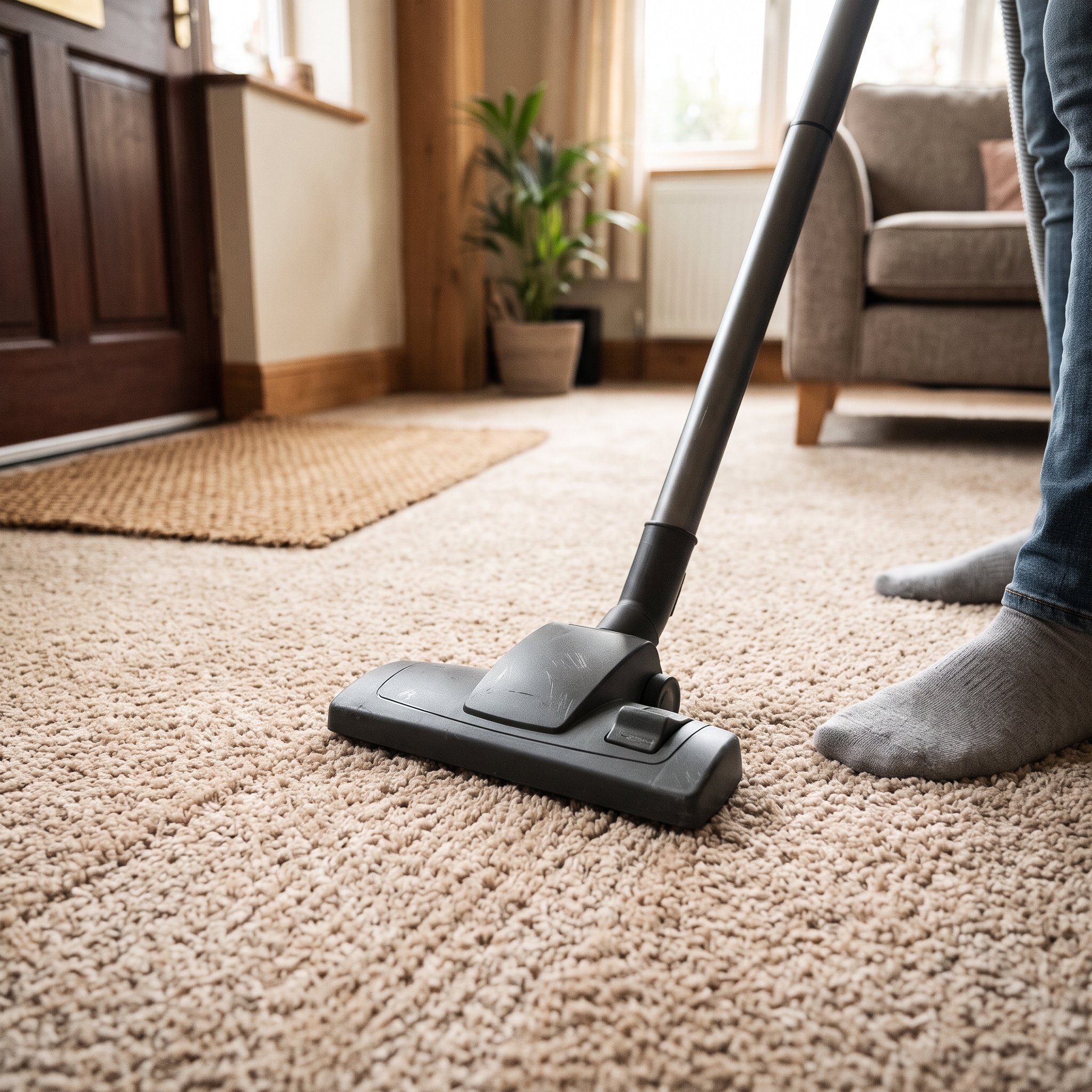
Consistent vacuuming is the foundation of every carpet maintenance routine and the single habit that produces the most significant difference in carpet lifespan across comparable households. According to Carpet One’s 2025 carpet care guide, vacuuming is the cornerstone of effective carpet maintenance and the most important thing a homeowner can do between professional cleanings.
Frequency should match traffic. High-traffic areas including entryways, hallways, and main living areas benefit from vacuuming two to three times per week. Lower-traffic areas including bedrooms and formal sitting rooms can be maintained with once-weekly vacuuming. The goal is removing surface soil before it works its way deeper into the fiber base where it becomes harder to extract and where its abrasive effect on fibers is most damaging.
Technique matters as much as frequency. According to carpetcleanexpert.com’s 2025 maintenance guide, slow overlapping strokes in multiple directions lift more debris from carpet fibers than quick single-direction passes. Vacuuming too quickly leaves behind a significant portion of the surface soil that slower passes would capture. Allow the vacuum’s suction time to work on each section of carpet rather than moving continuously across the surface.
Confirm your vacuum’s beater brush height is set correctly for your carpet pile. A beater brush set too low damages carpet fibers. One set too high does not agitate the pile effectively enough to lift embedded debris. Adjust the height setting so the vacuum moves across the carpet with light resistance rather than either gliding effortlessly or laboring to push forward.
Vacuum both the carpet surface and the areas along baseboards and in corners where debris accumulates but foot traffic does not carry it further into the room. These edges are frequently missed and become significant debris reservoirs over time.
Act on Spills Within Minutes, Not Hours
The difference between a spill that cleans up completely and one that becomes a permanent stain is almost entirely a function of how quickly it is treated. According to Blue Dog Carpet Cleaning’s maintenance research, quick action prevents liquids from soaking into the carpet padding and causing long-term damage. Most liquid spills that are blotted immediately and treated correctly do not become permanent stains. Most spills that are left for an hour or more are significantly harder to remove, and some bond permanently to the fiber after drying.
Blot, never rub. Rubbing spreads the spill laterally across more carpet fiber and drives it deeper into the pile. A clean white cloth pressed firmly onto the spill and lifted straight up removes liquid without spreading it. Work from the outer edge of the spill toward the center to prevent spreading the affected area.
Use cool or lukewarm water as a first response before applying any cleaning product. Many spills respond adequately to water alone if treated immediately. Applying a cleaning product as a first step sometimes sets certain stain types more firmly into the fiber before the liquid has been adequately removed.
When a cleaning product is needed, use one that is specifically formulated for carpet and appropriate for your carpet fiber type. Avoid products containing bleach, which can cause permanent color loss on dyed carpet fibers regardless of the instructions on the label. Avoid products with strong solvents unless specifically recommended for the stain type being treated.
Do not apply a large amount of any cleaning solution to the spill area. Over-wetting drives the stain material and the cleaning solution deeper into the backing and padding, which is both harder to extract and a potential moisture problem if the padding retains that moisture for extended periods.
If a stain has been treated and dried but remains visible, do not continue applying products over it. Contact a professional carpet cleaner. According to research from multiple carpet cleaning professionals, repeated DIY product application on a stubborn stain frequently makes it harder to remove professionally by adding product residue and sometimes by chemically altering the stain’s bonding characteristics.
Use Doormats and a No-Shoes Policy
A significant proportion of the soil load that accumulates in carpet fiber comes from outside. Dust, dirt, mud, pollen, pesticides, and bacteria tracked in on footwear reach carpet fibers with every step taken from the exterior entry point to any carpeted area in the home.
Walk-off mats at every exterior entry point capture a substantial portion of this tracked-in soil before it reaches the carpet. According to the maintenance research compiled by carpetcleanexpert.com, a large percentage of carpet dirt comes from outside, and door mats at entry points are one of the most cost-effective interventions available for reducing soil accumulation in carpeted areas.
A no-shoes policy inside the home extends this protection to every carpeted area. Shoes that have been worn outside carry the full load of outdoor soil, bacteria, and chemical residue directly into carpet fibers with each step. Removing shoes at the door eliminates this soil source entirely. According to Nebraska’s Best Carpet’s 2025 carpet maintenance guide, minimizing the dirt and oils tracked onto the carpet by adopting a no-shoes policy indoors is one of the five most effective carpet life-extension habits available.
For households where a strict no-shoes policy is not practical, designating a consistent shoe removal zone at the primary entry point and keeping the policy in effect for that transition zone produces most of the benefit even if it is not applied uniformly throughout the home.
Protect High-Traffic Areas
High-traffic lanes, the consistent paths that household members walk repeatedly across the same carpet area each day, accumulate soil and wear faster than any other carpet area. These concentrated wear zones can show visible fiber distress while adjacent areas of the same carpet look nearly new.
Area rugs placed over high-traffic carpet zones protect the carpet beneath them from direct soil accumulation and fiber wear. According to Blue Dog Carpet Cleaning’s maintenance guide, area rugs in frequently used areas protect carpets and extend their lifespan by minimizing the need for frequent professional cleanings of the underlying carpet. The rug takes the wear. The carpet beneath it is preserved.
Choose area rugs with a non-slip backing that does not contain rubber compounds that can transfer color or degrade the carpet backing beneath them over time. Carpet-safe rug pads or non-slip pads between the area rug and the carpet prevent movement and protect both surfaces.
Rotate furniture placement every six months. Heavy furniture creates indentation in carpet pile that, if left in the same position indefinitely, becomes a permanent impression. Rotating furniture slightly redistributes the compression load across a broader area of carpet surface and allows the compressed areas to recover. According to carpetcleanexpert.com’s maintenance research, shifting furniture every few months helps carpet wear more evenly and prevents permanent indentation in any single area.
Runner rugs in hallways serve the same protective function as area rugs in living areas. Hallway carpet receives concentrated directional foot traffic from every household member multiple times per day and typically shows wear earlier than any other carpeted area in the home. A runner rug extends the life of hallway carpet significantly.
Control Indoor Humidity
Humidity affects carpet in ways that most homeowners do not consider until a problem becomes visible. According to Blue Dog Carpet Cleaning’s research, controlling indoor humidity between 30 and 50 percent is important for preventing mold and mildew growth in carpets. Humidity above this range creates conditions that support dust mite population growth and, in severe cases, mold development in the carpet backing and padding.
Central Pennsylvania’s climate produces seasonal humidity variation that affects carpet conditions throughout the year. Summer months in Carlisle and surrounding communities produce elevated indoor humidity that, without adequate ventilation and dehumidification, can keep carpet backing and padding in a persistently damp state. Damp carpet backing is not visible from the surface but creates conditions for odor development and accelerated backing deterioration.
Run air conditioning during summer months to manage both temperature and humidity. A dehumidifier in basement carpet areas, which are naturally more humid than above-grade spaces throughout Pennsylvania’s warm season, reduces the moisture load that basement carpet backing absorbs over time.
In winter, interior heating systems often reduce indoor humidity to very low levels, which causes wood and carpet fibers to release moisture and can result in static electricity buildup in carpet. A humidifier that maintains humidity above 30 percent during winter months reduces static and keeps carpet fibers at a moisture level that supports their structural integrity.
Groom Carpet Fiber After Vacuuming
Carpet pile that has been compressed by furniture, foot traffic, or heavy use can be partially restored between professional cleanings through grooming with a carpet rake or stiff-bristle brush. According to the carpet care research compiled by nes-co.com’s 2025 maintenance guide, vacuuming in different directions and using grooming tools helps lift and restore carpet pile, preventing flattening and wear that accumulates in high-use areas.
A carpet rake with flexible plastic tines is the most effective tool for grooming medium to high-pile carpet. The tines reach into the pile and lift compressed fibers back toward their original upright position, which improves both appearance and the pile’s ability to resist the next round of compression from foot traffic.
For furniture indentations specifically, place an ice cube directly on the indented area and allow it to melt slowly. As the ice melts, the water is gradually absorbed by the compressed fiber, which causes the fiber to expand slightly and return toward its original height. Allow the area to dry completely before vacuuming to lift the restored fiber to its full height.
What Not to Do Between Professional Cleanings
Certain common household approaches to carpet maintenance actively shorten carpet life rather than extending it.
Avoid using rental carpet cleaning machines as a substitute for professional cleaning on a routine basis. As covered in prior content on this site, rental machines leave significantly more moisture in the carpet than professional equipment, which creates conditions for mold in the padding and produces wicking stains as carpet dries. For light maintenance between appointments, vacuuming and spot treatment are more appropriate than rental machine cleaning.
Avoid applying deodorizing powders routinely. Many carpet deodorizing powder products, including baking soda, leave fine particles in the carpet fiber base that are difficult for standard vacuum systems to fully extract. Over time, powder accumulation in the fiber base creates a residue that affects both carpet texture and the effectiveness of professional extraction when it occurs. Use deodorizing products sparingly and only on specific odor problems rather than as a regular maintenance product.
Avoid over-wetting during spot treatment. Applying large amounts of cleaning solution to spill areas forces moisture deep into the backing and padding where it is difficult to extract and where it creates ideal conditions for odor development and mold growth.
The Connection Between Daily Maintenance and Professional Cleaning Results
Daily and weekly carpet maintenance habits do not replace professional cleaning. They make professional cleaning more effective by reducing the soil load the professional equipment must address during the appointment.
A carpet that arrives at a professional cleaning appointment carrying a moderate soil load from consistent maintenance receives a deeper, more thorough clean than one that arrives with heavy, compacted soil from months of neglect. The professional equipment and chemistry can penetrate further into the fiber base and remove more contaminants when surface soil has been consistently managed rather than allowed to accumulate into a thick compacted layer.
According to research from Carpet One’s 2025 care guide, routine vacuuming combined with scheduled professional cleanings reduces accumulated debris within carpet fibers more effectively than either practice alone. The two approaches are complementary rather than substitutes for each other.
The Real Carpet Cleaners also provides professional rug cleaning, furniture cleaning, and mattress cleaning for Carlisle and surrounding Central Pennsylvania households who want to address every fabric surface in a single appointment. Check current specials before booking for available pricing.
Final Thoughts
Extending the life of your carpet between professional cleanings in Carlisle, PA comes down to a handful of consistent habits: vacuum frequently and correctly, treat spills within minutes rather than hours, use doormats and a no-shoes policy to reduce tracked-in soil, protect high-traffic areas with rugs and runners, manage indoor humidity within the 30 to 50 percent range, and avoid the common maintenance mistakes that accelerate carpet wear rather than preventing it.
The Carpet and Rug Institute’s finding that proper care extends carpet life to 10 to 15 years, compared to less than half that without it, reflects the compounding effect of these daily and weekly habits over the full ownership period. Every vacuuming session, every promptly treated spill, and every area rug placed over a high-traffic lane is a contribution to a carpet that reaches its full potential service life rather than one that falls short of it.
To schedule professional carpet cleaning in Carlisle, PA and surrounding Central Pennsylvania communities, contact The Real Carpet Cleaners at 717-307-5849. Serving Carlisle, Mechanicsburg, Harrisburg, Shippensburg, Camp Hill, and surrounding communities throughout Central Pennsylvania.